Fitbit Blaze vs. Other Fitbit Products
With the launch of any new product line, there is always the question about how it will affect interest in and sales of existing items.Google Trends provides a good visualization of online interest in the Fitbit Blaze vs. a few of their other product lines. We'll be comparing the Blaze with:
- Fitbit Charge HR - the model below the Blaze; geared to "active" lifestyle users (like the Blaze).
- Fitbit Surge - the model above the Blaze, top of the line and targeted to "performance" users.
- Fitbit Alta - launched soon after the Blaze, a more fashionable model for "everyday" users.

 |
| Worldwide Google web searches in past 90 days (as of 3/20/16) |
- In December 2015 with the holiday shopping season, web searches spiked for the two existing products, the Charge HR and the Surge. According to Fitbit's 2015 Annual Report (p. 16), their business is affected by seasonality with 38% of 2015 revenue generated in Q4, so the decline afterward is not unexpected.
- The announcement of the Blaze in early January and the Alta in early February caused some of the highest levels of search activity for those those lines since people were interested in learning more about these new products.
- The Superbowl ad for the Blaze appears have been effective at raising product awareness in February. The Surge also experienced slight upticks with its launch and Superbowl ad, probably because people were interested in exploring the differences between the two models.
- As the Blaze was released in early March and the Alta in mid-March, both products experienced an increase in web searches.
- Searches for the existing products (Charge HR and Surge) continued to decrease. However, these products experienced a similar decrease in early 2015 due to the time of the year (see chart below). So time will tell whether they will rebound in May-July when people are more active in the summer, or whether the new products have stolen some of their market share.
 |
| Worldwide Google web searches in 2015 |
 |
| Worldwide Google Shopping trends in past 30 days (as of 3/20/16) |


 |
| Meltwater IceRocket Blog trends for past month (as of 3/20) |
 On the flip slip, much of the Twitter activity are tweets for the purpose of entering a contest, tweets reselling the product, or retweeting a news link instead of actual insights from a user.
Although I did look at the Fitbit products through Social Mention at a few different times, the "last week" results jumped all over the place and I unable to create any meaningful analysis about trends or relationships between lines. So for I ran the reporting for the last month which provides a bigger picture view and better sense of where things stand.

 | |
| Social Mention in Last Month (as of 3/20) |
Just as a reminder, here are the definitions of the Social Mention criteria:
- Strength: the likelihood that your brand is being discussed via social media.
- Sentiment: ratio of positive to negative mentions.
- Passion: likelihood that the people talking about our brand will do so repeatedly.
- Reach: the range of influence, or the number of unique authors mentioning your brand divided by the total number of mentions
"But wait," you say, "the Surge has the highest Passion at 49% - their users must really be talking about it." And yet, when you look at the top users, they are "Original Offers" and "eBayShopperNews" and the second top Hashtag is "sweepstakes". The repeating mentions by the same users are just people selling the Surge or trying to win one, not a groundswell of love. The Charge HR at 38% has a similar profile for Passion. The Passion for the Blaze and Alta are much lower, probably because they are new products and haven't hit the reseller and grey market yet.
Regarding Sentiment, the Surge and the Blaze seem to be at the top for their ratios of 16:1 and 15:1 respectively. The Alta appears to only have a 3:1 ratio. However, six reposts of Engadget's review, "With Alta, Fitbit finally made a stylish fitness band" were marked as negative for tone (maybe the use of "finally"?), whereas I would classify them as positive based on "stylish" and the overall review - which would bring its Sentiment ratio to 26:1, the highest overall.
For the most part, all of the Fitbit products fall within a similar sphere of ratings and type of chatter. It's not extremely high in comparison to more well-established, globally known brands, but it's certainly respectable.
Based on the analytics, of all the product lines, I think the Surge is the most in danger with the introduction of the Blaze. The Blaze has several nice new features like the color screen, switchable bands, and limited FitStar programming that might appeal to the Surge performance user profile, if they are willing to sacrifice the in-watch GPS tracking of the Surge (and carry their phone instead to track location during distance training). If the Blaze eclipses the Surge (which it appears to be on track to do), I wouldn't be surprised if the Surge gets revamped in the future, either under that name or as a new product line, as their new top-tier product.
Fitbit Blaze vs. Competitors
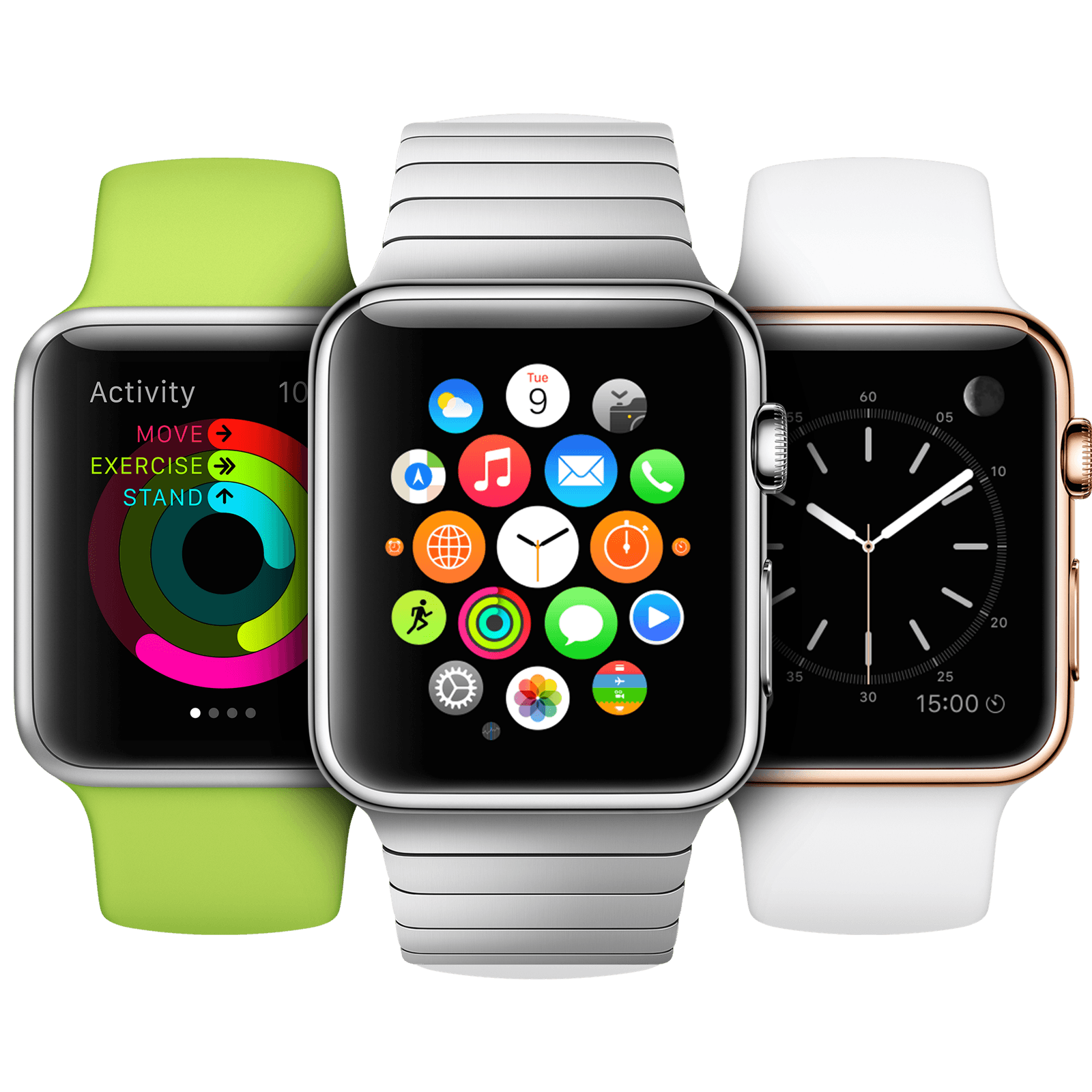 |
| Apple Watch |
Fitbit does acknowledge the concern of having broad-based consumer electronic companies, like Apple, in competition due to their larger financial resources, brand recognition, broader manufacturing and marketing resources, and the ability to discount pricing to increase market share (2015 Annual Report). According to a Wired article, on March 21, a price drop of $50 to $299 for the Apple Watch was announced, along with two new bands. There have also been rumors about an Apple Watch 2 being released in 2016, although we'll have to wait and see if any enhanced fitness features are included. So Fitbit is probably justified in being concerned.

Looking more at pure fitness tracker watches, Garmin currently offers the Vivosmart HR (which seems like it's equivalent to the Charge HR with the $150 price point and general functionality). In April 2016, Garmin will be introducing the Vivoactive HR ($250) which seems more aligned with the Surge and also has offers custom apps and watch faces. Garmin currently offers just the Vivoactive as a GPS smartwatch without the heart monitoring function for $220. The Vivoactive line is marketed for some niche fitness markets, like swimmers with its 5m underwater rating and golfers with its golf course database. Garmin is already well-known for its GPS functionality in navigation devices.
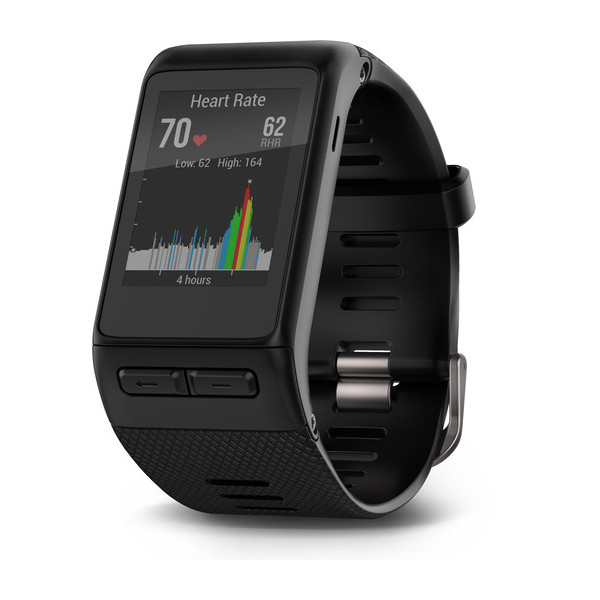 |
| Garmin Vivosmart HR |
 |
| Garmin Vivoactive |
So let's compare the Fitbit Blaze versus these competitors using analytics to get a sense of where they stand in relation to each other.
Using Google Trends, the Apple Watch clearly eclipses the other four search terms (Fitbit Blaze, Pebble Time, Garmin Vivosmart, Garmin Vivoactive). The Apple Watch also appears to be affected be seasonality with large holiday-time buying spike in December, followed by the subsequent decline. Only the upticks of the Blaze's launch and Superbowl are clearly visible.
 |
| Worldwide Google web searches in past 90 days (as of 3/21/16) |
 |
| Worldwide Google web searches in past 90 days (as of 3/21/16) |
 |
| Meltwater IceRocket Blog trends for past 3 months (as of 3/21) |
 |
| Meltwater IceRocket Blog trends for past month (as of 3/21) |

 |
| Social Mention in Last Month (as of 3/20) |
Also the Pebble's 63:0 Sentiment is a bit mis-categorized. Would you count 47 posts of this to be positive?

So I think we should look at this data with a grain of salt (and if you were social media monitoring for a living, invest in a paid product). These product lines also experience resellers and contests that influence the results. Again the Blaze is lower in Passion (8%) than its competitors, most likely because it's not being resold as much yet. Assuming that the data is consistently accurate or inaccurate (for those other than Apple Watch), we can see a similar popularity ranking of the Fitbit Blaze (40%), Pebble Time, and two Garmin products based on the Strength criteria.
But what do people really think about these products? Let's circle back to Amazon's ratings.

The Fitbit Blaze seems to match up pretty well against its competitors. Based on ratings, Apple Watch has the highest average at 4.6, followed by Pebble Time Steel with 4.3, then the Fitbit Blaze at 4.2. Yet at the 1-star level, Fitbit Blaze only has 5%, same as the Pebble Time Steel and less than others. For a product that has only been on the market for less than a month, it already has 939 ratings submitted - in third place after the Apple Watch with 1,262 and the Garmin Vivoactive at 1092, both of which have been on the market for around a year. Although people can certainly purchase through other vendors, the number of ratings is most likely a good indication of sales and bodes well for the Fitbit Blaze.
SWOT Analysis
So what's next for Fitbit? To inform our marketing recommendations, let's first conduct a SWOT Analysis using on the research done in Part 1 & 2:
Marketing Recommendations
Based on what I've observed with Fitbit overall, they have a very savvy marketing staff, building strategic relationships with other companies to grow their brand. Of course, everyone has room for improvements, so here are a few suggestions on ways they could move forward, using social media and the online community aspects of the brand.- Develop more emotion-based narratives based on people's relationships. Their most watched video on YouTube is for "Fitbit Charge HR: Know Your Heart" in which a man begins running in order to keep up with an athletic girl he likes.
- Getting fit can be a way to build relationship and stay motivated, so a multi-channel narrative could be build around getting active together, using Fitbit (I like the #FitTogether tag, although it's already taken, so perhaps use something like #FitbitTogether).
- Stories could range from parents doing activities with their kids, an adult spending time walking with an elderly parent, friends working out together to meet their goals, and of course, romance always plays well.
- The narratives could be scripted as a commercial/video, and Fitbit could also look for real life stories for text-based content. For example, I'm friends with a couple who used Fitbit to lose the weight they needed to in order to be able to adopt a child from South Korea - tugs the heartstrings, doesn't it? Fitness isn't just about the stats, it's often about the experience together.
- As people upgrade their Fitbits, I suspect they often pass their old ones along to a friend or family member (based on active user numbers being higher than product sales in 2015) which is great for sharing the experience with new users.
- Fitbit might also want to consider setting up a collection to donate your old device to a charity, such as one working with injured veterans. It may encourage veterans to keep active and users can feel good their contribution when they upgrade to the next model.
- Increase gamification aspects to help with motivation.
- Add in the ability to form your own teams and challenge others through the app or dashboard (especially as it sounds like defining groups may already be available through Corporate Wellness).
- Having your steps count towards something could also be a good motivator, although one would need to be careful in aligning it to something with a monetary value to prevent people faking activity; perhaps it goes toward a charity donation that's capped.
- Or the steps and other stats could count as experience points or money in an app. The app API is open, so game developers can use data as a basis for game play, or Fitbit could partner with an established developer to create something of a higher quality. This could encourage more sedentary people who like video games to increase their activity.
- The app/dashboard could also be adaptive - suggesting modification of goals slightly if you're consistently meeting (or not meeting) them to encourage continual growth and positive reinforcement.
- Use contests and competitions to energize the groundswell.
- A lot of activity on Twitter has been other companies giving away Fitbit products and having their followers share the contest. Fitbit could run their own contest if they just wanted to get the word out - maybe even with two different products lines to see if one has a better response than the other.
 One of the cool things about some of the other smartwatches is the ability to customize the watch face. Although I suspect Fitbit may not want to open up the ability for other developers to modify their watch code or add apps, perhaps they can run a contest asking their fans to design a watch face that they would like to have. The request for more watch faces has come up in the product development forum, so it would be interesting to see what the groundswell designs and mods up.
- Have a contest to be selected to go a major sporting event, like a the Olympics or the Superbowl, as trip - or even better, as a Fitbit ambassador...
- Promote Fitbit with tie-ins to sporting events and activities.
- People often get tired of doing the same workout and are looking for something fresh. Fitbit could highlight some different sports and activities (like curling) through their social media, providing link for people to find a chance to try it out near you. This concept could tie back to their "Find Your Fit" tagline.
- The Olympics provides a great opportunity, with its international focus on sports. Fitbit could connect with athletes who use their devices and conduct interviews about their training regime, experience of the sport, and maybe even share their Fitbit stats. These interviews could potentially be done by vlogger(s) who wins a competition (see above) with the episodes can be posted on YouTube. Maybe even show vlogger trying the sport for the first time and describing the experience afterwards.
- Fitbit could also work with marathons and cycling races in various locations across the country - possibly even sponsoring a team to support a cause.
- Pay more attention to Facebook and promote online communities.
- As Fitbit gets more entrenched in our culture, the demographics for users will probably begin to trend older and to those who are less tech savvy... which means that they are more likely to use Facebook than other social media platforms.
- On some days, Fitbit is very responsive to people's wall posts; on others, not so much - it's very hit or miss. People get frustrated when their concern isn't addressed. It creates ill will towards the company, and turn potential customers to their competitors. Fitbit may want to invest in some additional support staff to monitor Facebook and respond in more timely manner (like is done with their Twitter support account).

- I'm also not sure how many people realize the Fitbit has an online community with various discussion boards and the feature request area. So they might want to get the word out about those resources as well (i.e. "Thanks for your suggestion. The best way for us to track customer ideas is our Feature Request board, where you can log in to post your ideas and vote up suggestions from others.") While the community is linked in the browser dashboard, it's not currently visible in the mobile app, so possibly add this interaction option to the interface.
- Fitbit should schedule a periodic review of their Facebook page profile. I noticed on their Page Info under Products, neither the Blaze or the Alta are listed, and their last Milestone was in 2013. Details like that can make a profile look a bit neglected. They also only like six other Facebook pages - this from a company that has business partnerships with Westin, Thermos, and others. Come on Fitbit - share the love! By liking other profiles, that entity may return the like, potentially leading others to your site.