Summary of Fitbit Products and Services
Fitbit offers a variety of products, from clip-on trackers to the more popular wristband styles, ranging in price from $59 for the basic Zip to $249 for the full-featured Surge.
The range of features and pricing in the product line helps to encourage their audience to "find their fit" based on their goals and needs - from people just wanting to become more active, to others who are pursuing weight loss, and to more hard-core fitness enthusiasts. In early 2016, two new trackers were announced: Blaze, a fitness smartwatch for those with active lifestyles (whose launch campaign we'll be exploring), and Alta, an everyday fitness band with a designer flare.
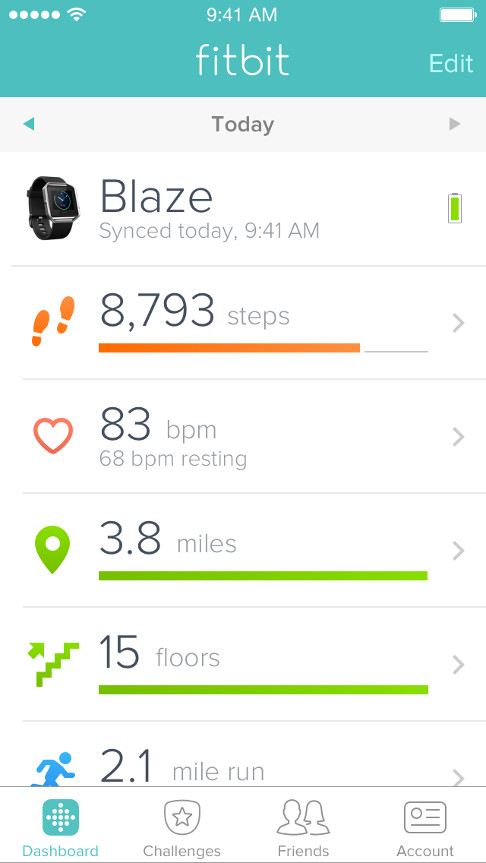
 Fitbit has also developed FitStar with Personal and Yoga apps to provide free basic and paid premium workouts that integrate with your Fitbit account. Blaze users can also access certain FitStar content through that fitness watch. Fitbit's web API is also open so that other app developers can integrate Fitbit data into their program's with user consent, which is helpful for someone already using another platform for fitness or weight tracking.
Understanding that Fitbit is not just selling a product, but interconnected products and services, helps to shed light on the strategy behind the Fitbit Blaze and their social media marketing. They want you to hear good things about Fitbit, become a customer, develop brand loyalty through positive interactions and meeting your goals, and expand your Fitbit experience through their online subscriptions and upgrades.
Embracing Online Communities & Social Media
Fitbit seems to understand and embrace the groundswell through their own online communities and social media activities.Fitbit operates their own communities to educate, motivate, and support their audience:
- Blog
- Help website
- Help forum (log in required)
- Product Development: Feature Request forum and Web API forum for developers (login required)
- Discussion board (login required)

Fitbit also participates in the following social media platforms to meet their customers where they are:
- Facebook with over 1.2 million likes
- Twitter @fitbit with 252K followers, 1079 likes, and almost 9K tweets (and also maintains a dedicated @FitbitSupport account 11.8K likes, 98K followers, and 260K tweets)
- Instagram with 248K followers
- Pinterest 39K followers
- YouTube with 24K subscribers and its most popular video has over 6.8 million views
- Google+ with almost 61K followers and 18.8 million view (although last post is over 4 weeks old, so they may be phasing it out)
Education & Motivation

Social media will occasionally add promotional posts about specific products to their feed.
 |
| Instagram post from 3/24/16 |
Product Support
As a tech company, providing product support is one of Fitbit's biggest challenges.

Support is also offered directly through social media through their @FitbitSupport Twitter account which is very busy (over 260K tweets!), responding to posts every few minutes with personalized help for their situation - pointing people toward specific help articles, the Feature Request forum, or advising them to contact support for unusual circumstances or possible product replacement.

Sometimes questions are posed through other social media channels as replies to posts, and more often than not, a member of the audience will answer instead of the Fitbit account.

Overall Fitbit's support has a good reputation and people seem to appreciate the assistance, although there are some detractors.

However looking through comments, it becomes apparent that a major issue for Fitbit is that so many people seem to have problems with the reliable and quality of their products in real-life situations - some people have had their Fitbit replaced three or four times and are getting tired of the hassle.

Innovation & Ideas
 Fitbit is interested in innovation and listening to what their customers want through the Feature Request forum which is divided up by topics/products. Like most idea communities, users can post their suggestions and vote on other people's ideas to show their support for the requested feature. Because Fitbit's software and desktop/apps can be updated, sometimes requested features and fixes can be added in another version (instead of requiring purchase of a different product). Fitbit does update the status of the request such as what's under consideration and what's been implemented.
Marketing
YouTube seems to be the least utilized social media platform for Fitbit. The company is mostly just using it to host their commercials and doesn't reshare other content. Granted, if you search for "Fitbit" or "Fitbit Blaze" plenty of content can be found - mostly reviews and comparisons by news media and actual customers, product unboxing sessions, and support tips offered by users.
Fitbit Blaze Launch & Social Media Reaction
Now that we have a sense of how Fitbit operates through social media, let's take a look at the Fitbit Blaze product launch and see how the groundswell responded.The new Fitbit Blaze fitness watch was announced on January 5 at the 2016 Consumer Electronics Show (CES) with a release date in March. According to their press release, "Fitbit Blaze trended #1 on Facebook and #3 on Twitter in the U.S. on the day of the launch". The Blaze features
Their YouTube video does a good job describing the product features, such as a color touchscreen, heart rate monitoring, connected GPS (through phone), five-day battery life, activity tracking, FitStar workouts, ability to interchange bands, music controls, and alerts from phone, text, or calendar.
The video also identifies who their target market is - fitness enthusiasts with a bit of a competitive side in their 20's - early 30's who want to look good when they go out. As Fitbit collects demographic data from its users as part of the fitness tracking, they have a pretty idea the profiles of who is using which types of products and what type of activities they are doing.
As of Feb. 29, the video itself has had over 450K views with almost 3K thumbs up and 301 thumbs down (a 10:1 ratio of approval to disapproval). The YouTube stats report shows that it was mostly viewed near the launch with a few upticks since then.

Looking at Google Trends for website search for the last 90 days, we can see a similar peak in early January with word of the Blaze's launch. The other major peak is on February 8th, the day after the Super Bowl.

 |
| Image Search Trend |
 |
| Google Shopping Trend |
Since the launch, news site mentions of the Fitbit Blaze have often been either reviews or in context of another Fitbit-related story - like reports/predictions about their stock prices or class-action lawsuits filed in several states against Fitbit alleging inaccurate heart monitoring technology, especially during strenuous exercise.
Based on the related search queries, people are interested in reviews of the Blaze, especially in comparison to other Fitbit products and the Apple Watch, as well as when it's due to be released.

Meltwater IceRocket
In MeltWater IceRocket, this narrative of interests also play out looking through samples from the twitter feed:
 |
| Sample of Twitter text results on 2/18 |
 |
| Sample of Twitter text results on 2/25 |
Wait! Did you catch that... the groundswell scooped Fitbit support! Fitbit actually started shipping pre-ordered Blazes earlier than the promised March release date - and people are super-excited about it on Twitter!!

Overall, mentions of the Fitbit Blaze are much lower on the blogosphere, as can been seen by MeltWater IceRocket's 30-day trend report:


Looking at their feed, blog posts are typically a few shared reviews or Fitbit-related stories :
 |
10 of 10 blog results for the past week (as of 2/25/16) |
Social Mention is another tool which provides real-time reporting on term usage based the following criteria:
- Strength: the likelihood that your brand is being discussed via social media.
- Sentiment: ratio of positive to negative mentions.
- Passion: likelihood that the people talking about our brand will do so repeatedly.
- Reach: the range of influence, or the number of unique authors mentioning your brand divided by the total number of mentions

 |
| Sample of Twitter Feed from Social Mention on 2/21 (and it continues on like that) |
Looking at snapshots of the results (all including twitter, for the past week from the date noted), we can see that Strength and Reach have increased over time, so the Fitbit Blaze is being increasingly being discussed on social media by a variety of unique authors.

Conclusion
Through the social media quantitative reporting and qualitative information, we can almost see customers going through the marketing funnel (Groundswell, p.101) with the product launch:- Growing awareness of the product
- Consideration through doing research, looking at reviews, and talking to others
- Developing a preference towards a product and making a decision to purchase
- Taking action to purchase and the anticipation of receiving it
- The beginning of loyalty with the thrill and enjoyment of a new product (and hopefully not disappointment about tech issues)

While structurally Fitbit is set-up to be able to embrace the groundswell, I get the sense that they don't listen and respond as well through certain channels (like Facebook) where there isn't a dedicated support staff. When users communicate through their designated channels, they typically have a quicker response rate and better customer experience. While Fitbit has a large number of brand enthusiasts, some product issues are causing a lot more work for support and may potentially turn people off from purchasing their products.
Going forward it might be interesting to look into either how the Blaze stacks up against the Apple Watch, or how its online performance compares against other products in Fitbit's stable, like the Charge HR, Surge, or new Alta.

No comments:
Post a Comment